
2025 Annual Report

Letter to the Region
2025 marked a year of meaningful firsts for the Northwest. As the alliance launched the first year of its 2025 – 2029 business cycle, NEEA began translating regional priorities into action, advancing solutions designed to meet the evolving needs of electric and natural gas customers across our four-state region.
Energy efficiency remains a cost-effective and strategic energy resource that is a vital part of addressing the future needs of the Northwest energy system. NEEA’s collaborative model brings utilities and energy efficiency organizations together to share risk, align markets, and drive long-term change that results in sustained energy savings. This regional coordination helps the Northwest address resource adequacy, support affordability, and navigate emerging technologies that are quickly shaping how we live and work. In 2025, these aligned regional efforts delivered results, including the advancement of NEEA’s first dedicated dual-fuel program, Residential Dual-Fuel HVAC.
Building on years of electric and natural gas Market Transformation, this work marks a new chapter in how the region approaches integrated energy solutions. These systems provide a flexible pathway to optimize energy use between the electric and gas systems based on grid conditions, fuel prices, and extreme weather events and reflect a shared regional commitment to delivering reliable, affordable and flexible energy for all Northwest households and businesses.
Meeting the region’s growing energy needs will require as much cost-effective energy efficiency as we can deliver. Building on a strong foundation within its electric portfolio, NEEA is accelerating near-term energy savings by adding new products to existing programs, expanding into new markets and rural communities, and leveraging new channels like the Northwest Marketplace to open new pathways to consumers.
At the same time, early progress in the Whole Building Special Project is helping the region advance more integrated approaches to building performance, while the region’s first End-Use Load Flexibility Market Transformation effort is helping manage demand through better, more responsive energy use.
The alliance continues to advance new opportunities, including dual-fuel system applications in commercial and residential markets, advanced commercial water heating, and emerging technologies like high-efficiency fan systems, bringing forward new market pathways to support the region’s evolving energy needs.
Taken together, these efforts are more than milestones, they are proof of what’s possible when the region moves forward with shared purpose. As we look ahead, the path is clear: by continuing to invest in collaboration, embrace innovation, and scale proven solutions, we can ensure energy efficiency remains the backbone of a resilient, affordable, and dependable energy system.
As you read this year’s report, you’ll see how these firsts are already shaping what comes next. As the challenges before us evolve, so does our collective ability to meet them. NEEA is proud to help shape a future where efficiency doesn’t just support our energy needs, it helps define how we meet them.

Becca Yates
Executive Director,
Northwest Energy Efficiency Alliance

Gilbert Archuleta
NEEA Board Chair
Director, Customer Energy Management
Puget Sound Energy
With increasing demand on our energy grid, we must meet the challenge head-on to ensure affordable, reliable power for Montanans. I appreciate the work of the Northwest Energy Efficiency Alliance to advance practical, energy-efficient technologies and solutions that help meet the growing energy needs of our state.”
Greg Gianforte
Governor of Montana
JUMP TO: Top | Stories | Timeline | Energy Savings + Additional Value Metrics | Investments | PDF
2025 Portfolio Highlights

~67% of heat pumps sold in the Northwest were variable speed
Including both ducted and ductless systems, efficient variable‑speed models made up two-thirds of heat pump sales. Within ducted systems alone, variable‑speed units also exceeded 50% of sales, signaling a clear shift toward advanced, high‑efficiency systems becoming the market standard. (Based on heat pump sales data collected by NEEA between 2022-2024 and published in 2025).

Efficient pumps reached 23% market share
This milestone reflects growing adoption of efficient pump models, signaling steady uptake of a technology with broad energy saving potential. NEEA accelerated this market growth by reducing barriers through partnerships that introduce improved product labeling and targeted market education. This progress reflects stronger alignment across the supply chain and growing confidence and awareness of efficient pump options.

46% increase in ENERGY STAR® v9 Ultra High-Definition TV sales
Across Idaho, Montana, Oregon, and Washington, sales grew from 57,000 to 84,000 units, reflecting rising consumer demand and strong manufacturer and retailer support for this emerging energy-saving opportunity. In 2025, NEEA partnered with Best Buy and other major retailers to promote ENERGY STAR televisions in stores, encouraging consumers to choose more efficient models while prompting retailers to stock and manufacturers to certify products to the latest ENERGY STAR specification.

Over 235,000 clicks resulting from Level Up campaign
In 2025, NEEA’s Heat Pump Water Heater Level Up campaign drove sustained engagement across the Northwest, generating significant activity and interest from both customers and contractors. This targeted, performance‑ focused demand building helps move audiences from awareness toward adoption and supports longer‑term market growth beyond one‑time incentives.

4 states and national energy codes advanced
In 2025, NEEA actively supported energy code development across Idaho, Montana, Oregon, Washington, and the International Energy Conservation Code (IECC), strengthening the pipeline for higher-efficiency requirements across the region. At the same time, NEEA improved near-term market performance by delivering training and tools that enhanced the application of recently adopted codes.

30+ active emerging technology projects
Throughout 2025, NEEA scanned the market for new technologies and product improvements with real‑world energy‑saving potential. Working with the region, NEEA identified the most promising opportunities for further investigation, ranging from early-stage innovations to targeted enhancements to existing products that could strengthen current programs or inform future ones.

200+ products listed across Compliant and Qualified Products Lists
In 2025, NEEA influenced the development and advancement of higher performance tiers across multiple Compliant and Qualified Products Lists (QPLs), including residential and commercial heat pump water heaters, dryers, high performance dedicated outdoor air systems, and luminaire level lighting controls. Broader QPL coverage helps simplify decisions for the market and accelerates adoption of high-efficiency options.
JUMP TO: Top | Portfolio Highlights | Timeline | Energy Savings + Additional Value Metrics | Investments | PDF
Market Transformation Stories
In 2025, NEEA’s proven approach to Market Transformation has delivered unprecedented value to the region. The stories below showcase some of the many ways the alliance advances energy efficiency to reduce energy waste, support grid resiliency and provide economic value to the region.
Priming the Region for a Turning Point in Pump Efficiency
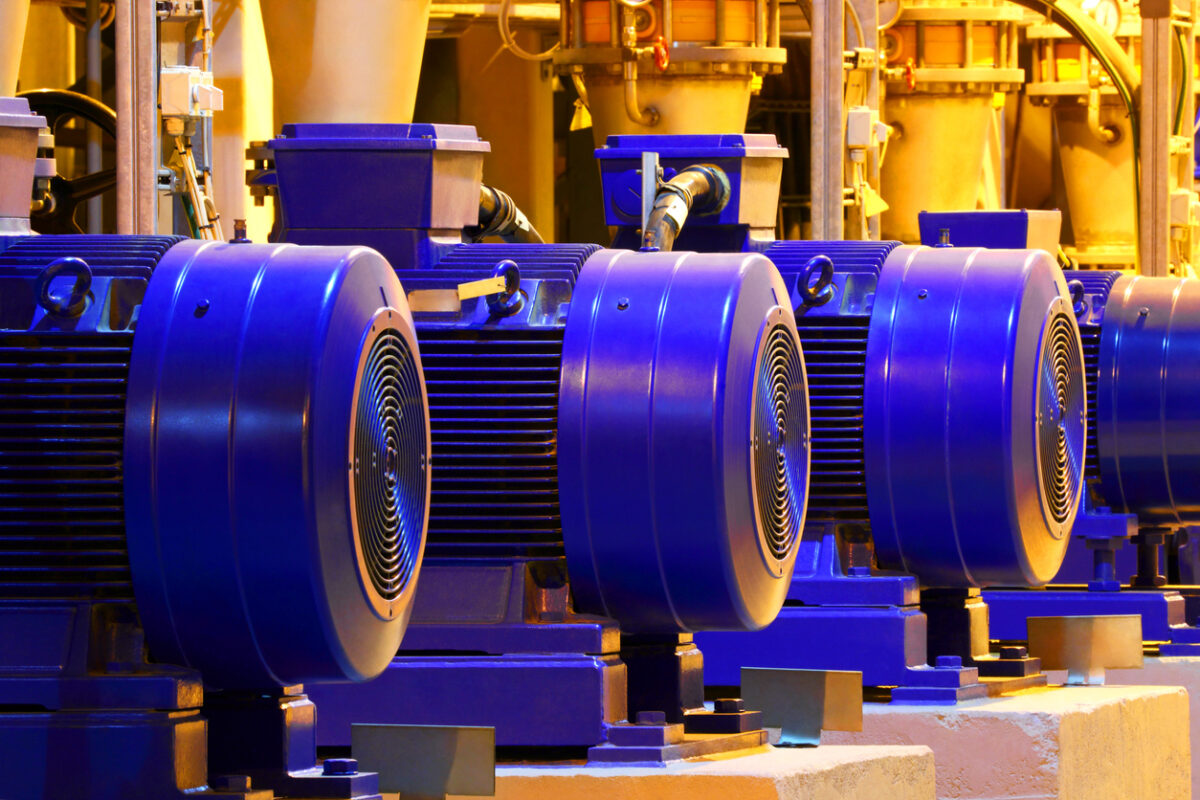
Following the U.S. Department of Energy’s 2020 release of a new energy efficiency standard for commercial and industrial pumps, the alliance leveraged its data expertise, mid and upstream market relationships, and regionwide scale to support the Northwest’s compliance with the new regulations.
In 2025, these efforts achieved several milestones, including the launch of an improved, user-friendly pumps energy rating label, the market advancement of a promising new pumps technology, and the expansion of the alliance’s partnerships with manufacturers and manufacturer representatives to include organizations operating largely in Idaho, Montana, and rural Oregon and Washington. With NEEA’s Market Transformation process in action and pump efficiency more achievable for the region than ever, the alliance is poised to continue expanding its market support for this product into the agricultural sectors of all four Northwest states.
Ear to the Ground: How Market Research and Evaluation Accelerate Progress
Advancing energy efficiency across the Northwest means more than innovative technologies and strong partnerships, it requires trusted market insights and evaluation to determine if NEEA’s efforts are driving real progress. That’s where NEEA’s team of Market Research and Evaluation (MRE) scientists play a critical role.
From developing a deep understanding of a new target market to measuring long-term impact, NEEA’s MRE scientists support every stage of NEEA’s Market Transformation work. Through rigorous research, structured evaluation and data-driven insights, the team helps ensure that programs are grounded in evidence, responsive to changing market conditions and delivering measurable value to the entire region.

Natural Gas Efficiency in Commercial Buildings: Advancing Practical Solutions at Scale
Commercial buildings are entering a new phase of energy efficiency defined by a shift toward resilient, scalable solutions. Rather than seeking new systems, cost-conscious decision makers today are focused on technologies that are easier to adopt, easier to install, and easier to integrate into existing buildings. This shift reflects both market reality and growing system needs. As demand on the electric grid increases, particularly during peak periods, efficient natural gas technologies can play an important role in supporting reliability, managing costs, and expanding energy choices for building owners.
Through its work with utilities, manufacturers, and market actors, NEEA is advancing a whole systems approach to natural gas efficiency that prioritizes real-world implementation. The results are twofold: a portfolio of solutions that can be deployed across a diverse and often constrained commercial building stock and a suite of emerging technologies to build on for the future.
How Data Drives Market Transformation
For the NEEA, data has always been at the center of Market Transformation. And as the alliance moves deeper into Cycle 7, the role of data is evolving — becoming even more strategic, more integrated across markets, and more instrumental in delivering long-term value to funders.
In Cycle 6, NEEA expanded its data collection capacity, establishing systems and partnerships that give the alliance and its funders an unprecedented view of the market. Now, that foundation is allowing NEEA to ask sharper questions, identify barriers earlier, and pinpoint the most effective points of intervention.


Explore NEEA’s History of Success Timeline
More than 30 years ago, the energy efficiency community in Idaho, Montana, Oregon and Washington created NEEA based on a shared belief that together, the region can accomplish far more than any one organization can alone.
Scroll through the timeline to explore key milestones and defining moments in the alliance’s history of Market Transformation.
JUMP TO: Top | Portfolio Highlights | Stories | Timeline | Investments | PDF
2025 Energy Savings Results
Market Transformation is a long-term process. The following graphs and charts show energy savings associated with changes in the market that NEEA has influenced over time through its Market Transformation activities. As depicted below, alliance activities create permanent market changes that deliver energy savings returns long after the 5-year investment period has ended.
Looking ahead, NEEA has lowered its energy savings forecast range for Cycle 7 (2025-2029) compared to business plan targets. The updated forecast reflects the dynamic market conditions which are currently shaping energy efficiency markets, reductions in new construction, and delays in state energy codes and federal standards.
NEEA is still very early in the business cycle, and the current estimate is intentionally conservative. To mitigate the risk in NEEA’s five-year co-created1 savings, the organization is pursuing several strategies to accelerate near-term market change, expand existing programs, advance new opportunities and increase data visibility. There is no indication of risk in NEEA’s 10-year energy savings forecast.
2025 Co-Created Electric Energy Savings
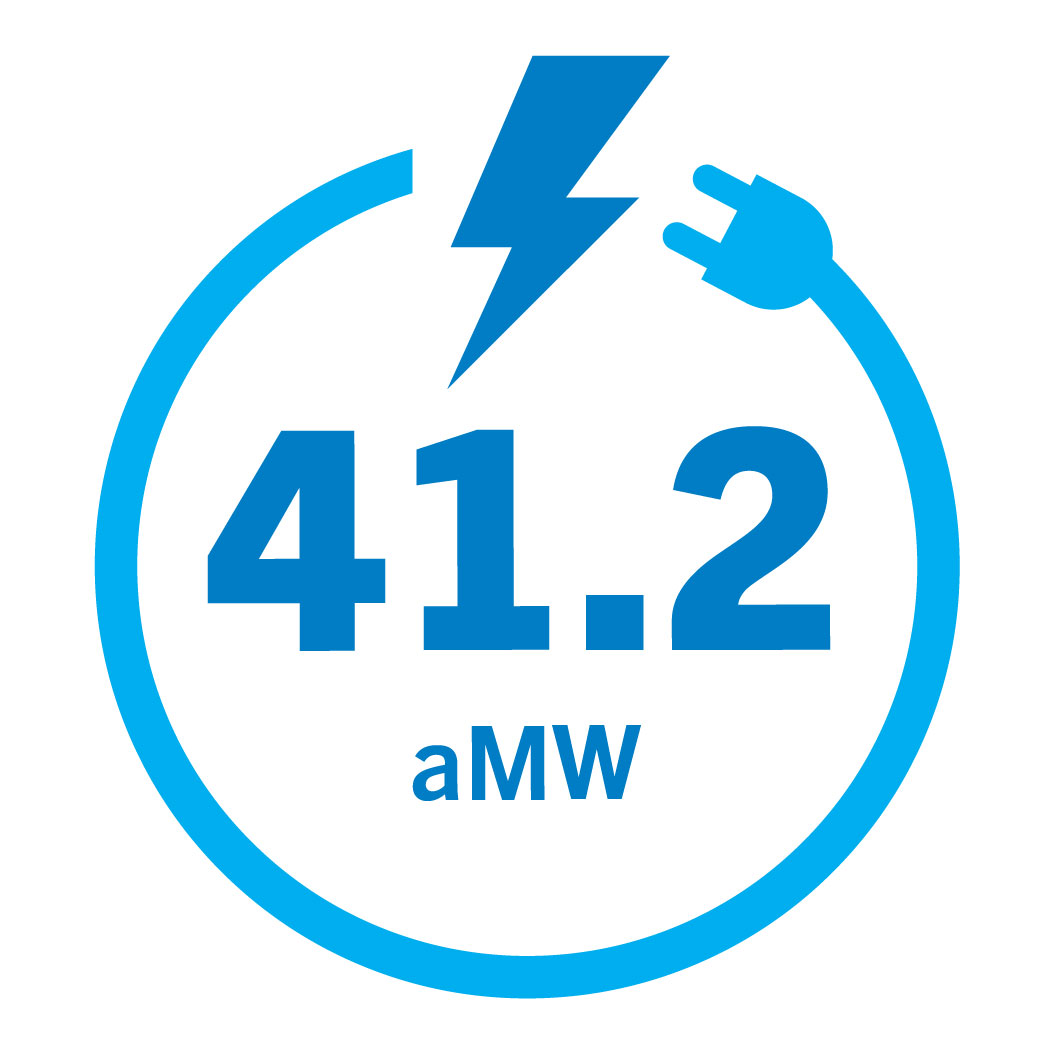
NEEA estimates that the region achieved more than 41 average megawatts (aMW)2 of co-created energy savings in 2025.
2025 Co-Created Natural Gas Savings
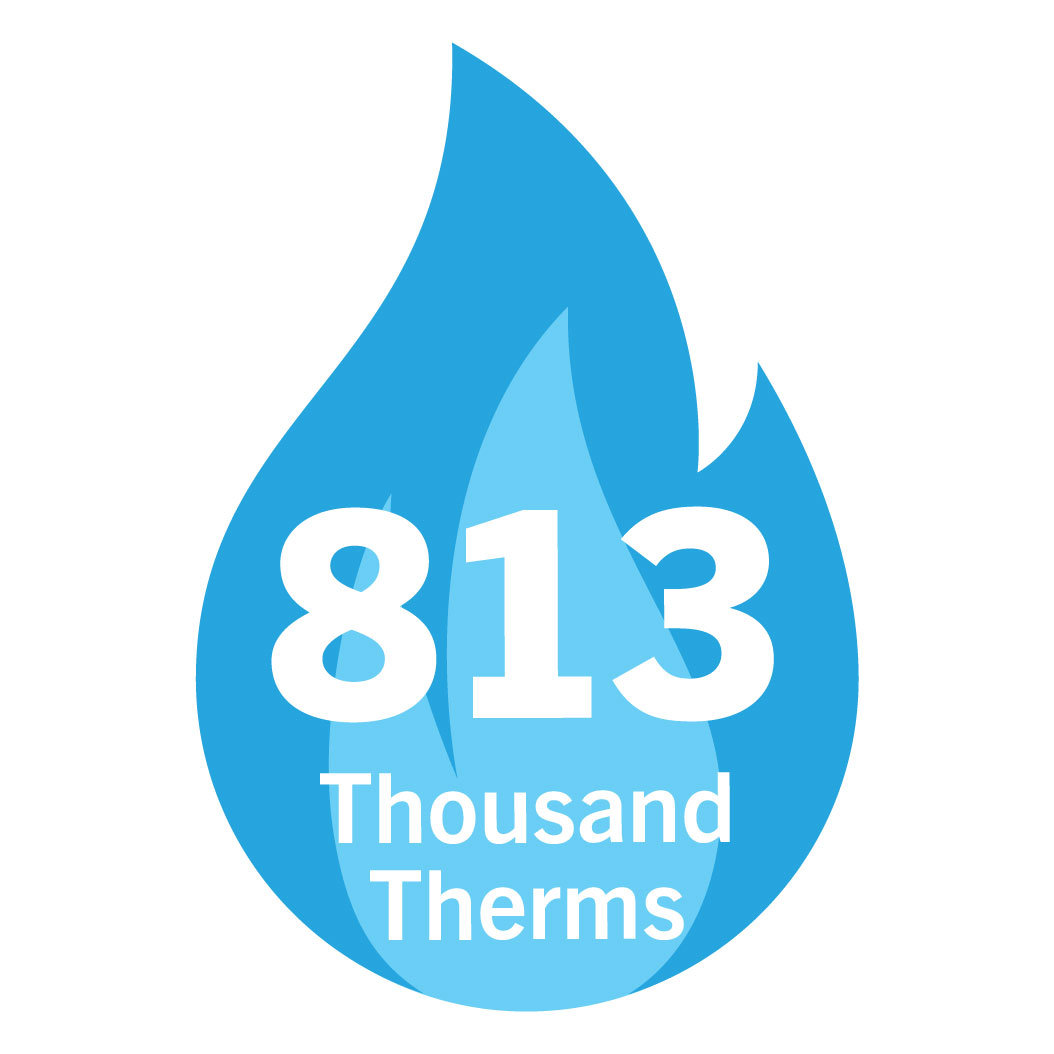
NEEA estimates that the alliance achieved more than 813,000 Therms of co-created natural gas savings in 2025.
Progress to 5-year Goals
Co-Created Electric Energy Savings
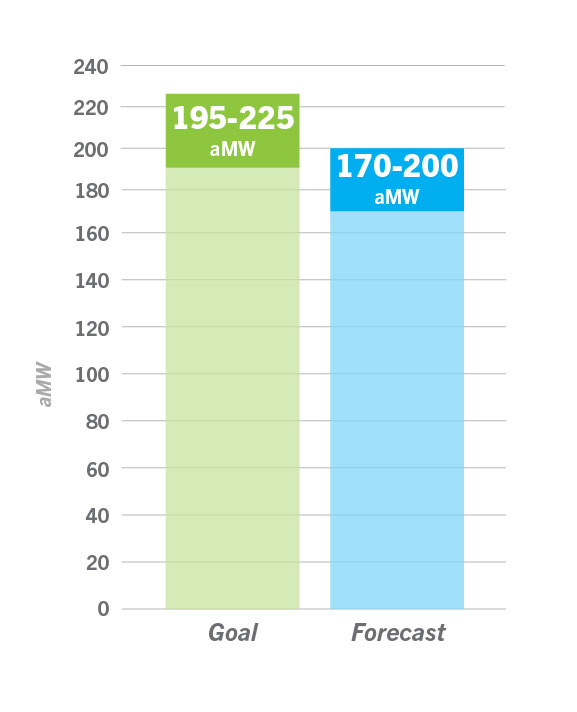
For its Cycle 7 Business Plan (2025-2029), NEEA estimates that the region will achieve between 170-200 aMW of co-created electric energy savings through the efforts of the alliance’s Market Transformation portfolio. This is equivalent to the amount of energy needed to power more than 140,000 Northwest homes each year.
Progress to 5-year Goals
Co-Created Natural Gas Energy Savings
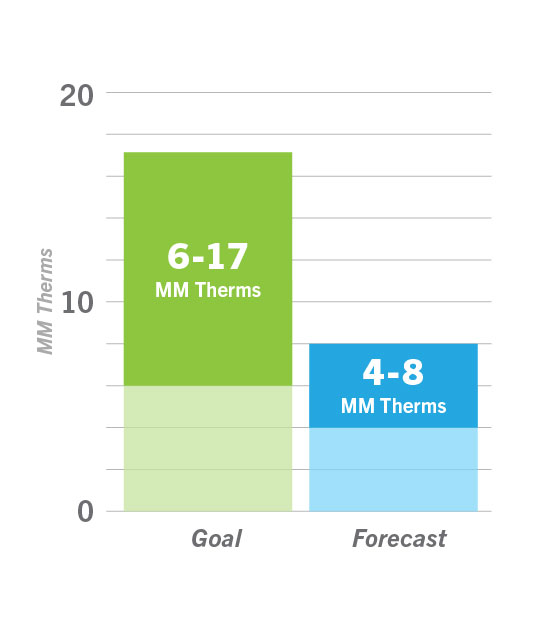
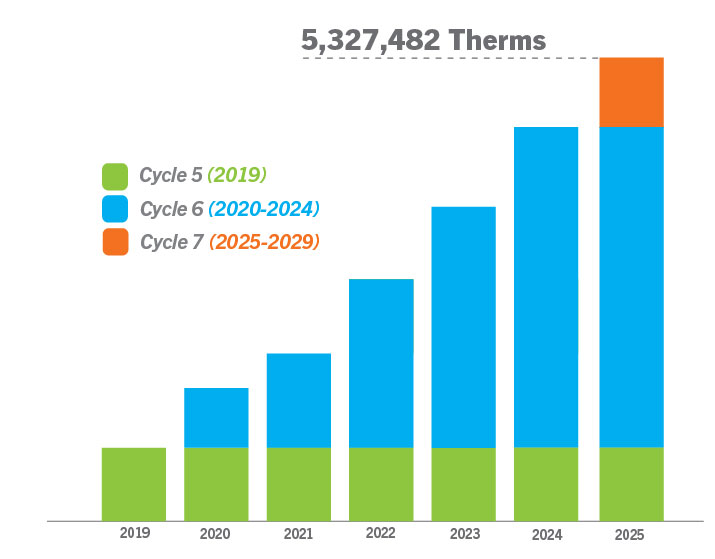
NEEA estimates the region will achieve between 4-8 Million (MM) Therms of co-created natural gas energy savings through the efforts of the alliance’s Market Transformation portfolio during its Cycle 7 Business Plan (2025-2029).
Additive Co-Created Savings
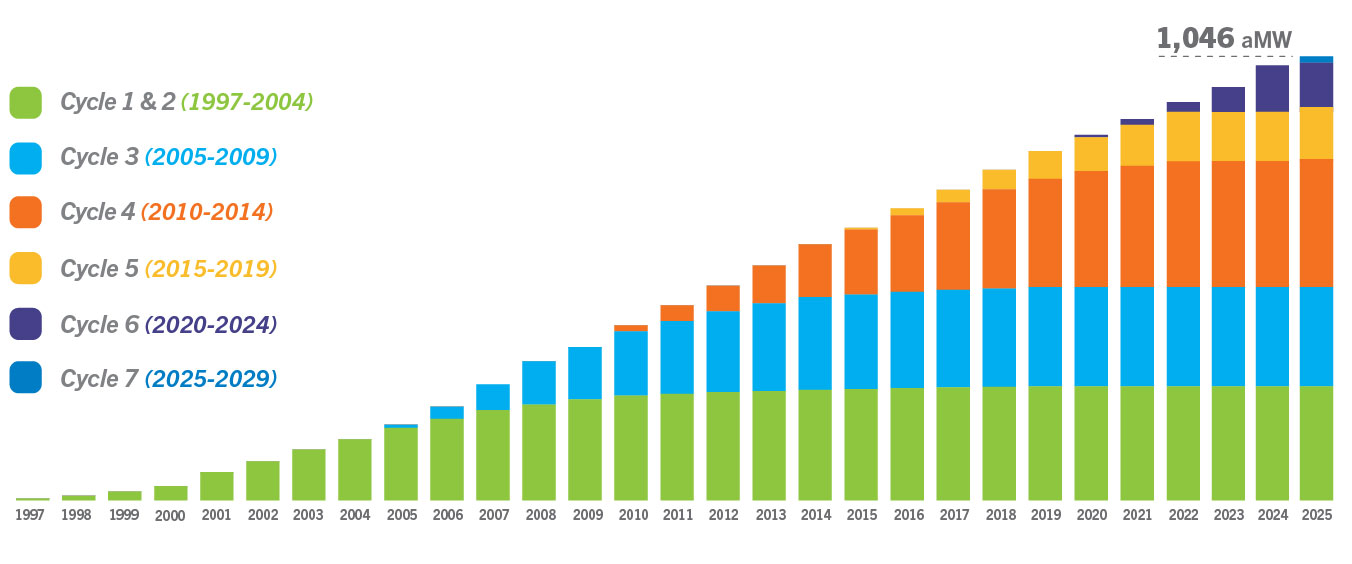
While NEEA is funded in 5-year increments, Market Transformation programs play out over a longer period, often realizing their full potential over a period of 15 years or more. The following charts depict how NEEA’s electric and natural gas investments for each business cycle resulted in permanent market change that led to continued long-term energy savings.
Working together, the region has achieved the following additive3 co-created savings:
- More than 1,046 aMW of co-created electric energy savings since 1997. This is equivalent to enough energy to power more than 763,000 Northwest homes each year.
- More than 5MM Therms of co-created natural gas savings since 2019.
Electric (1997 – 2025)
Natural Gas (2019 – 2025)
20-Year Benefit Cost-Ratio:
Reflects the 20-year value of the regional investment in Market Transformation efforts. The alliance expects all programs to meet a benefit-cost ratio threshold of 1 or better.
- Electric benefit-cost ratio: 2.0
- Natural gas benefit-cost ratio: 1.1
Electric Regional Peak Demand:
NEEA’s analysis uses a regional peak hour definition of 6 p.m. weekdays in December, January and February for winter peak and 6 p.m. weekdays in July and August for summer peak.
Winter:
- 2025: 82 MW
Summer:
- 2025: 62 MW
Avoided CO2 Emissions (tons):
Electric:
- 2025: 184,000
Natural Gas:
- 2025: 5,400
Glossary of Savings Terms:
- Co-created energy savings include all savings above an estimated baseline that occur in the market due to the combined efforts of NEEA and its partners, including the utilities and program administrators who make up the alliance. Totals may be rounded to the nearest whole number or 0.1 decimal place.
- Average megawatt (aMW) is the continuous output of a resource with one megawatt of capacity over a period of one year. This equates to 8,760 (the number of hours in a year) MW hours or 8,760,000 kilowatt hours. 1 aMW = equivalent to enough energy to power about 730 Northwest homes per year.
- Additive energy savings are defined as the sum of new first-year savings occurring each year across multiple years.
JUMP TO: Top | Portfolio Highlights | Stories | Timeline | Energy Savings + Additional Value Metrics | PDF
2025 Investments
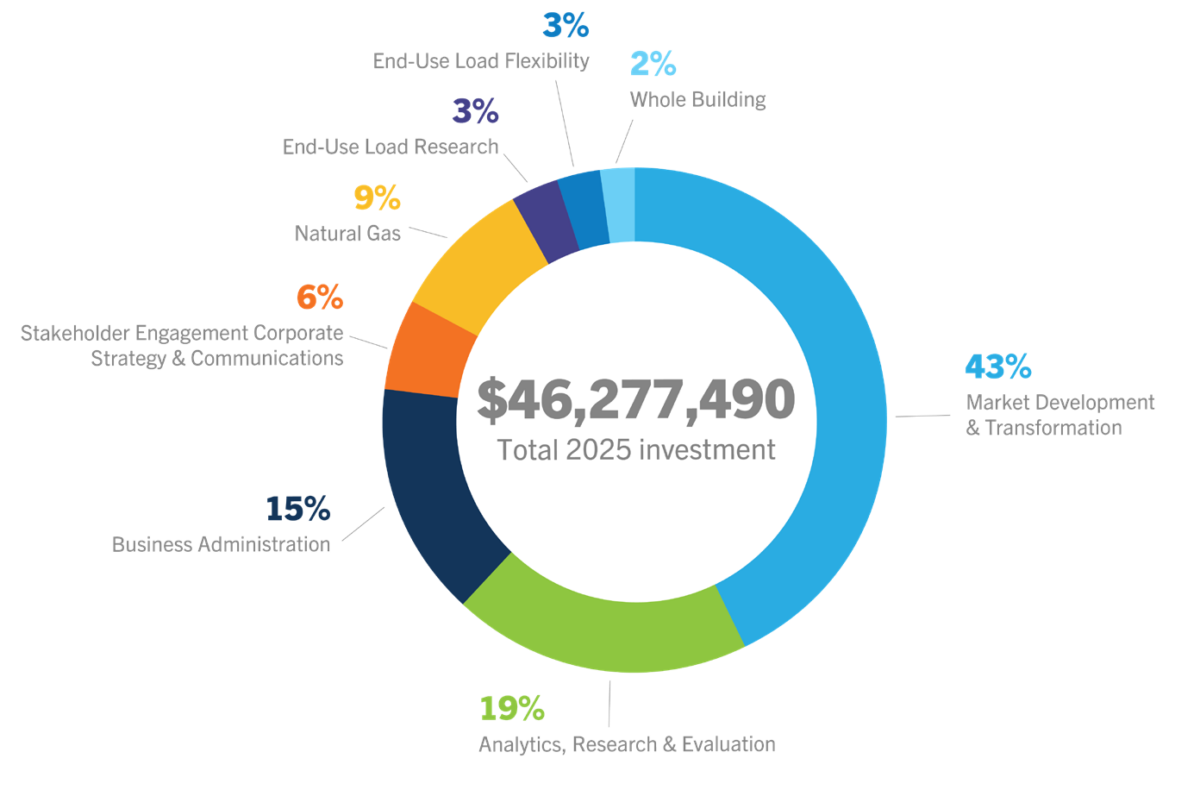
- $20.4 Million – Electric Market Development & Transformation
- $8.7 Million – Analytics, Research & Evaluation
- $7.1 Million – Business Administration
- $2.5 Million – Stakeholder Engagement, Corporate Strategy & Communications
- $4.2 Million – Natural Gas Market Development and Transformation
- $1.2 Million – Electric End-Use Load Research (special project)
- $1.5 Million – End-Use Load Flexibility (special project)
- $0.7 Million – Whole Building (special project)
Balance Sheet
As of December 31, 2025
| Assets | |
|---|---|
| Cash and cash equivalents | $ 13,916,012 |
| Short-term investments | $ 3,000,000 |
| Funder and other receivables | $ 71,865 |
| Prepaid expenses | $ 938,254 |
| Property and equipment | $ 1,535,594 |
| Operating Lease right-of-use asset | $ 2,920,299 |
| Total Assets | $ 22,382,024 |
| Liabilities and Net Assets | |
|---|---|
| Accounts payable and other liabilities | $ 4,621,913 |
| Advances from funders | $ 10,182,165 |
| Operating Lease Liability | $ 3,722,299 |
| Total Liabilities | $ 18,526,377 |
| Net Assets | |
|---|---|
| Without donor restrictions | $ 3,855,647 |
| With donor restrictions | N / A |
| Total Net Assets | $ 3,855,647 |
| Total Liabilities and Net Assets | $ 22,382,024 |
Statement of Activities
Year ending December 31, 2025
| Revenues | |
|---|---|
| Electric contributions | $ 36,984,303 |
| Natural Gas contributions | $ 5,405,077 |
| End-Use Load Research contributions | $ 1,021,810 |
| End-Use Load Flex contributions | $ 1,861,550 |
| Whole Building Contributions | $ 917,700 |
| Special fund contributions | $ 498,414 |
| Interest and other income | $ 356,831 |
| Total Revenue | $ 47,045,685 |
| Expenses | |
|---|---|
| Compensation and benefits | $ 17,741,163 |
| General administration | $ 4,530,847 |
| Direct project costs | $ 24,005,480 |
| Total Expenses | $ 46,277,490 |
| Change in Net Assets | $ 768,195 |
NEEA Board of Directors
The list below reflects Board members that served on the Board in 2025, as well as those currently serving on the Board at time of publishing.
Gilbert Archuleta
NEEA Board Chair
Puget Sound Energy
Brittany Broyles
Tacoma Power
Michael Colgrove
Energy Trust of Oregon
Debbie DePetris
Clark Public Utilities
Kellye Dundon
NW Natural
Joe Fernandi
NEEA Board Vice Chair
Seattle City Light
Suzanne Frew
(left Board in 2026)
Snohomish County PUD
Jamae Hilliard Creecy
(left Board in 2026)
Bonneville Power Administration
Nicole Hydzik
NEEA Board Secretary
Avista Utilities
Dan James
(joined Board in 2026)
Bonneville Power Administration
Chris Johnson
Benton PUD
Whitney Jurenic
(joined Board in 2026)
NorthWestern Energy
Josh Mitchell
Chelan PUD
Clay Monroe
(left Board in 2026)
Pacific Power
Quentin Nesbitt
Idaho Power
Elizabeth Osborne
Washington Governor’s Office
Eileen Quigley
Clean Energy Transition Institute
Caleb Reimer
Cascade Natural Gas
Kyle Roadman
NEEA Board Treasurer
Emerald PUD
Bonnie Rouse
Montana Governor’s Office
Ruchi Sadhir
Oregon Governor’s Office
Richard Stover
(left Board in 2025)
Idaho Office of Energy Mineral Resources
Jim White
(left Board in 2025)
Chelan PUD
Danie Williams
(left Board in 2025)
NorthWestern Energy
Explore More 2025 Updates
For a deeper view into NEEA activities, the full quarterly newsletter catalogue and quarterly reports offer additional detail on activities and progress throughout the year.
Q1 Quarterly Report
Q1 marked a strong start to NEEA’s 2025 to 2029 business cycle, with early progress toward advancing energy efficiency across the Northwest.
Q2 Quarterly Report
Q2 featured the release of NEEA’s Cycle 6 and 2024 Annual Report, alongside continued progress advancing emerging technologies and reducing market barriers.
Q3 Quarterly Report
Q3 focused on developing NEEA’s 2026 Operations Plan, alongside continued progress advancing regional initiatives, including building codes, dual-fuel pilots, and heat pump water heater awareness.
Q4 Quarterly Report
Q4 wrapped up 2025 with key milestones and strong regional engagement, alongside continued progress advancing energy efficiency and load flexibility.